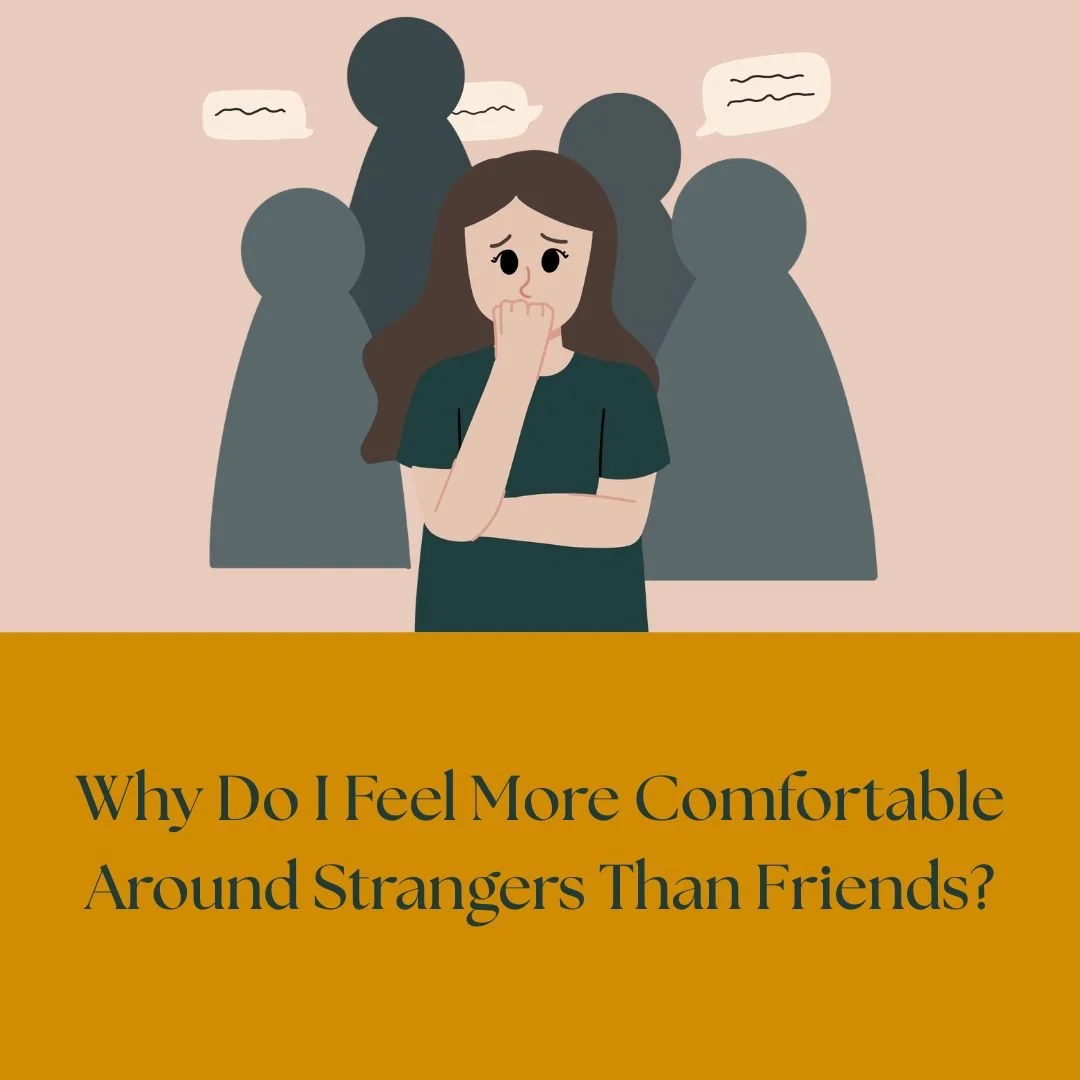
It’s a question people ask in a whisper:
“Why do I feel more relaxed going out somewhere I don’t know anyone… but tense and in my head when I’m around people I actually care about?
Shouldn’t it be the opposite? Is something wrong with me?”
Short answer: no.
Nothing is wrong with you.
Longer answer? This actually makes a lot of sense — especially if you struggle with social anxiety.
Let’s break it down.
Social Anxiety and the Fear of Being Judged
If you experience social anxiety, your brain is constantly scanning for:
How am I being perceived?
Did that sound weird?
Was that awkward?
Did I just embarrass myself?
Are they judging me?
Now imagine walking into a restaurant in a different city. No one knows you. No one’s opinion follows you home.
Your brain says:
“Low stakes.”
If a stranger judges you? You’ll never see them again.
Their opinion doesn’t affect your belonging. It doesn’t affect your relationships. It doesn’t affect your identity.
So your nervous system relaxes.
Why You Might Feel More Anxious Around Friends
Now picture being at a party with people you care about.
People you respect.
People you want to keep in your life.
Suddenly the stakes feel higher.
Your thoughts might sound like:
What if they think I’m boring?
What if I say something dumb?
What if I ruin my reputation?
What if this changes how they see me?
This doesn’t mean you’re broken.
It means you care.
And anxiety attaches itself to what matters most.
The “Ruined Forever” Reputation Myth
Social anxiety often comes with catastrophic thinking:
“If I mess up socially, my reputation will be ruined forever.”
Your brain is wired for social survival. Historically, rejection from your group meant danger. So your nervous system treats awkward moments like potential exile.
But one slightly off joke at dinner?
That’s not exile. That’s being human.
Your brain is overestimating social risk.
Is It Avoidance to Prefer Being Around Strangers?
Not necessarily.
This is where Acceptance and Commitment Therapy (ACT) becomes helpful.
ACT doesn’t focus on eliminating anxiety.
It focuses on helping you act according to your values — even when anxiety shows up.
Instead of asking:
“How do I stop feeling anxious?”
We ask:
“What matters to me here?”
Acceptance and Commitment Therapy (ACT) and Social Anxiety
ACT includes several core processes, but three are especially relevant here:
1. Cognitive Defusion
Learning to notice your thoughts instead of automatically believing them.
Instead of:
“I’m embarrassing myself.”
Try:
“I’m having the thought that I’m embarrassing myself.”
That small shift creates psychological distance.
2. Acceptance
Allowing anxiety to exist without trying to eliminate it.
You might say:
“Anxiety is here because I care about these friendships.”
Anxiety isn’t a flaw. It’s a signal.
3. Values-Based Living
This is the heart of ACT.
Ask yourself:
Do I value connection?
Do I value being known?
Do I value meaningful friendships?
If yes, then sometimes anxiety is the price of admission.
And it might be worth paying.
When It’s Okay to Choose the “Low-Stakes” Social Option
Here’s the nuance:
You are allowed to want:
Deep, meaningful connection (even if it brings anxiety)
Light, carefree nights where you feel anonymous and free
Both can align with your values.
The key question is:
Are you choosing intentionally — or avoiding automatically?
If you skip every meaningful gathering because anxiety feels uncomfortable, that may limit your life.
If you sometimes choose a low-pressure environment because you’re tired and want ease, that’s not dysfunction. That’s discernment.
Nothing Is Wrong With You
Feeling more comfortable around strangers than friends doesn’t mean:
You’re shallow
You don’t care about your relationships
You’re socially broken
It means:
You value belonging
Your brain is wired for social safety
Your anxiety system sometimes overshoots
That’s human.
If this sounds familiar, therapy — especially ACT-informed therapy for social anxiety — can help you build flexibility instead of fear.
And if you’re exploring that, finding the right therapist fit matters. You deserve someone who helps you move toward connection, not just away from discomfort.