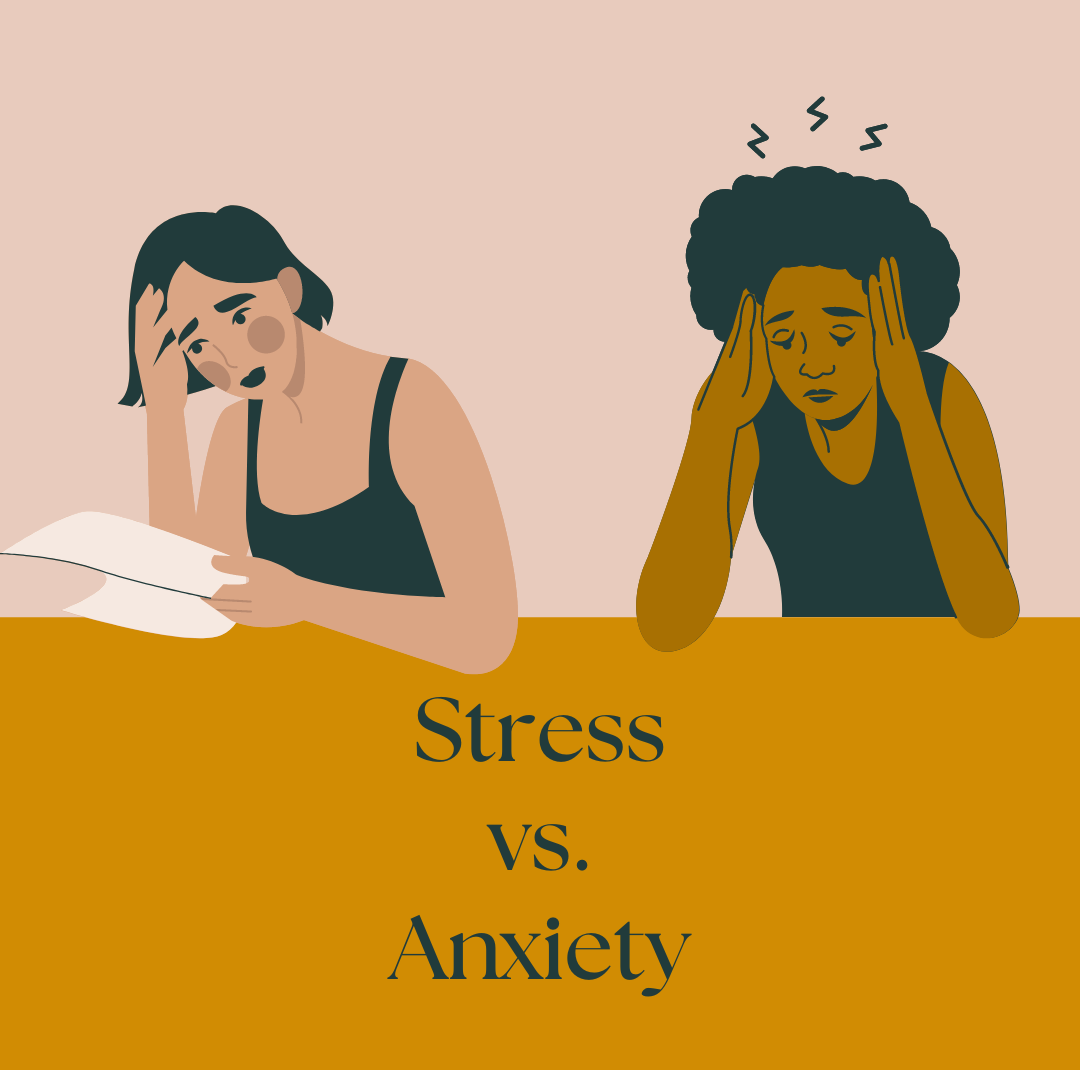
Stress and anxiety are often used interchangeably, but they’re not quite the same thing. While both can impact your mental health and well-being, they show up in different ways and need different types of care. So, what exactly is the difference between stress and anxiety—and how can you manage them so they don’t take over your life?
What Is Stress?
Stress is typically a short-term reaction to a specific situation or demand—like an upcoming deadline, a tough conversation, or a major life event. It often feels like a surge of pressure or nervous energy. Sometimes, stress can be helpful, pushing us to stay focused or meet a goal. But too much of it can leave us feeling overwhelmed, exhausted, and burnt out.
The good news? Stress usually fades once the stressful situation resolves.
What Is Anxiety?
Anxiety, on the other hand, tends to stick around longer. Think of it as stress’s persistent cousin—it doesn’t necessarily need a clear reason to show up. Anxiety often feels like constant background noise, fueling worry, tension, and a sense of impending doom, even when nothing specific is going wrong.
It can cause symptoms like restlessness, irritability, trouble sleeping, and difficulty concentrating. While stress is usually tied to an external trigger, anxiety often lingers internally.
Stress vs. Anxiety: The Key Differences
Trigger: Stress is usually tied to an external situation; anxiety may not have a clear cause.
Duration: Stress tends to be short-term; anxiety can be long-lasting.
Response: Stress often ends once the stressor is gone; anxiety may persist even after things have “calmed down.”
Intensity: Anxiety tends to amplify our fears, often making things feel worse than they are.
How to Manage Stress and Anxiety
Managing Stress:
Practice deep breathing or progressive muscle relaxation
Try mindfulness or guided meditation
Take breaks, move your body, or do something creative
Set boundaries to avoid overwhelm
Managing Anxiety:
Acknowledge and name what you’re feeling
Talk to a trusted friend, family member, or therapist
Focus on grounding techniques (like the 5-4-3-2-1 method)
Explore cognitive-behavioral tools to challenge anxious thoughts
Final Thoughts
Stress and anxiety are both normal human experiences—but they don’t have to control your life. By learning to tell the difference and using tools to manage them, you can take meaningful steps toward mental clarity and emotional balance. And if you’re feeling stuck, reaching out for support is always a sign of strength—not weakness.