Living with Ambiguity: Why “Not Knowing” Feels So Hard
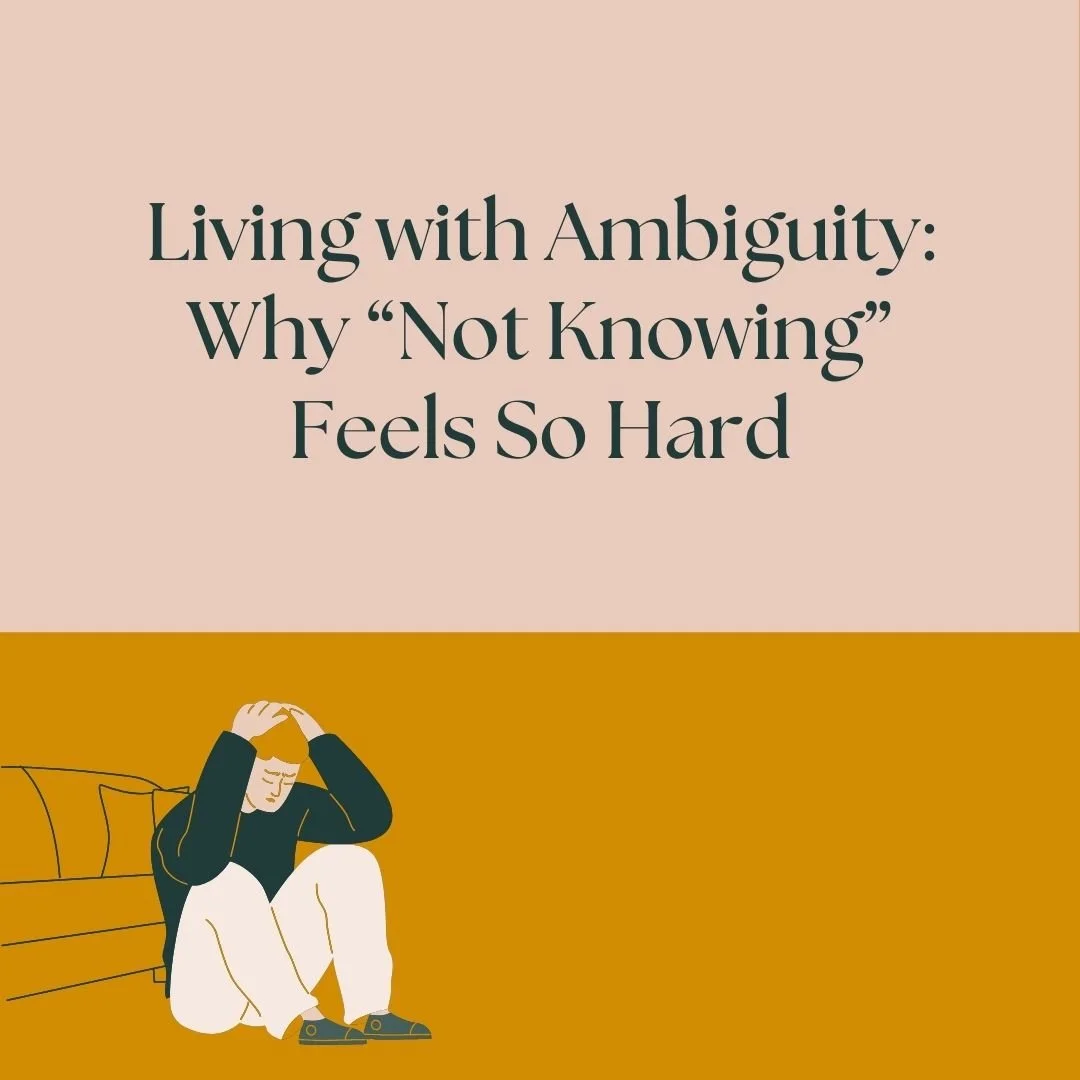
If you’ve ever stared at your phone waiting for a reply that never came, you already know the discomfort of ambiguity. Our brains really don’t like not knowing. In fact, ambiguity—those situations where the outcome is unclear, where there’s no definite answer or reason why—tends to make people feel frustrated, anxious, and even unsafe.
But why is ambiguity so tough? And how can we respond in healthier ways instead of letting our minds run wild? Let’s break it down.
Why Ambiguity Feels Threatening
From an evolutionary standpoint, the unknown has always carried risk. If you didn’t know what was lurking in the tall grass, your brain was better off assuming threat than probably nothing. Fast forward to today, and that same wiring still exists—except now it gets triggered by things like unanswered texts, vague feedback from your boss, or a “we need to talk” message with no explanation.
In other words, ambiguity feels threatening because our brains equate “I don’t know” with “I might be in danger.”
The Brain’s Habit: Filling in the Blank
Here’s the tricky part: when our brains encounter ambiguity, they don’t just sit quietly in the unknown. Instead, they scramble to fill in the blank.
“They didn’t text me back because they’re mad at me.”
“They’re probably busy in a meeting.”
“I must have done something wrong.”
Sound familiar? These explanations might feel like clarity, but they’re usually biased. Our brains tend to default to negative or self-protective assumptions—sometimes to prepare us for “the worst,” other times to soothe us with “safe” stories. Either way, they’re guesses, not facts.
The Problem with Guesswork
The issue is that our “filled in” stories can be inaccurate and harmful. If your brain jumps to “They must be angry at me” every time someone delays a response, that assumption might fuel unnecessary anxiety, self-blame, or even conflict.
In reality? All you truly know is that a message hasn’t been answered yet. The rest is narrative your brain has created.
Learning to Live with Ambiguity
Ambiguity isn’t going anywhere—it’s part of life. But you can learn to cope with it in healthier ways:
1. Catch the Fill-In-the-Blank Habit
Notice when your brain is making up a story. Simply saying to yourself, “I don’t actually know why they haven’t responded,” can create some distance between fact and assumption.
2. Reality-Check Your Thoughts
Ask: Is this a fact, or is this my brain filling in the blank? Often, the answer is: “This is my brain trying to make sense of uncertainty.”
3. Practice Tolerating Discomfort
Ambiguity is uncomfortable, not dangerous. Remind yourself: “Not knowing is hard, but it doesn’t mean I’m unsafe.”
4. Use Grounding or Self-Soothing Skills
When ambiguity spikes anxiety, grounding exercises (e.g., deep breathing, naming things you can see/hear/feel), or self-compassionate self-talk can help bring you back to center.
5. Reframe the Unknown
Instead of seeing “not knowing” as inherently bad, practice considering it as open possibility. Sometimes the unknown means potential, not threat.
Final Thoughts
Ambiguity can feel like a mental itch you desperately want to scratch. Our brains are wired to treat “the great unknown” as dangerous and to fill in the blanks as a way to cope. But more often than not, those stories are guesses—and biased ones at that.
The challenge (and the growth) comes in learning to hold space for not knowing, to remind yourself that ambiguity is uncomfortable but not inherently threatening. And in doing so, you start to break free from the trap of your brain’s assumptions.