Most of us have heard about “self-regulation” — the idea that we should be able to calm ourselves down, manage our emotions, and keep our nervous systems in check. Sounds great in theory. But in practice? We’re wired to regulate best with other people. Enter: co-regulation.
What is Co-Regulation?
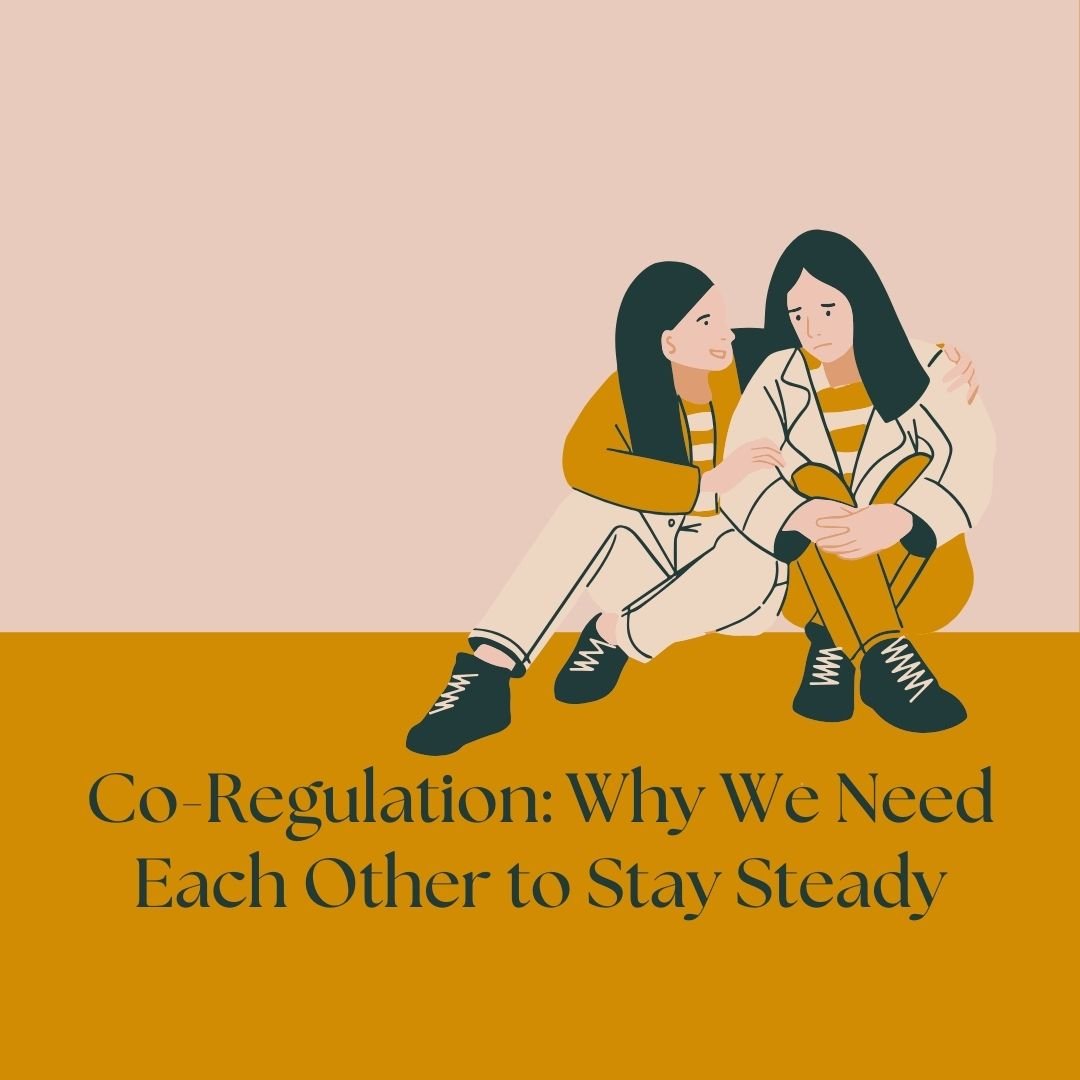
Co-regulation is the process of calming, grounding, and soothing ourselves through connection with someone else. It’s rooted in neuroscience: our nervous systems are social systems. When we’re stressed, anxious, or overwhelmed, our body actually looks to another person’s voice tone, body language, and presence to decide whether it’s safe to settle.
Think of it like two tuning forks—tap one, and the other vibrates in harmony. Our brains and bodies do the same thing when we’re around safe, steady people.
Why Co-Regulation Helps
It calms the nervous system. A gentle voice, steady breathing, or even just someone sitting nearby can lower our heart rate and signal safety.
It interrupts stress spirals. Left alone, our minds can spin. A co-regulating presence interrupts that loop.
It builds trust and intimacy. Sharing regulation strengthens bonds, because safety and closeness go hand in hand.
It models healthy regulation. Especially in parenting, kids learn to regulate by borrowing their parent’s calm.
Relationships That Benefit Most
While all relationships benefit from co-regulation, here’s where it shows up in big ways:
Romantic partners: Soothing each other during conflict instead of escalating.
Parents and children: Kids can’t self-regulate until their nervous systems mature — they rely on us first.
Friendships and support systems: A safe friend who listens without judgment is a co-regulator.
Therapy: A therapist’s calm, grounded presence helps clients feel steady enough to do deeper work.
How to Co-Regulate
Some practical ways:
Use your voice. Speak slowly, gently, and at a lower volume.
Offer physical presence. Sitting nearby, hand on a shoulder, or a hug (with consent).
Sync your breath. Deep, slower breathing can bring the other person’s rhythm down too.
Ground together. Notice the room, name things you see, or focus on sensory input.
Validate, don’t fix. “I’m here,” often works better than problem-solving in the moment.
What Gets in the Way
Even with the best intentions, co-regulation isn’t always easy. Common obstacles:
Our own dysregulation. Hard to offer calm if we’re spiraling ourselves.
Mismatch in needs. One person wants to talk it out, the other wants quiet.
Old patterns. If we grew up without healthy co-regulation, we may not trust it.
Shame. We think we “should” be able to calm down alone, so we don’t reach out.
How to Overcome Those Obstacles
Practice self-awareness. Notice your own nervous system before jumping in.
Communicate needs. Try, “I need calm presence” vs. “I need space to vent.”
Learn new scripts. “I’m here with you,” or “Let’s take a breath together” can feel awkward at first, but they work.
Challenge the myth of independence. We’re wired for connection. Reaching out is strength, not weakness.
Final Thought
Co-regulation reminds us that being human isn’t a solo sport. Yes, self-regulation matters — but so does letting ourselves lean on others. Whether you’re a partner, parent, friend, or therapist, your calm presence can literally help another nervous system come back to safety.
And if you’re someone who struggles to regulate — whether alone or with others — therapy can be a place to practice co-regulation in real time. Finding the right fit matters, so if this resonates, it might be worth reaching out.