What Counts as Trauma, Really?
When most people hear the word “trauma,” they picture the “big stuff”—abuse, violence, accidents, war. And yes, those experiences are certainly traumatic. But trauma isn’t always about the headline-grabbing events.
Here’s the truth: trauma isn’t defined by the event itself. It’s defined by how your brain and body respond when they feel completely overwhelmed.
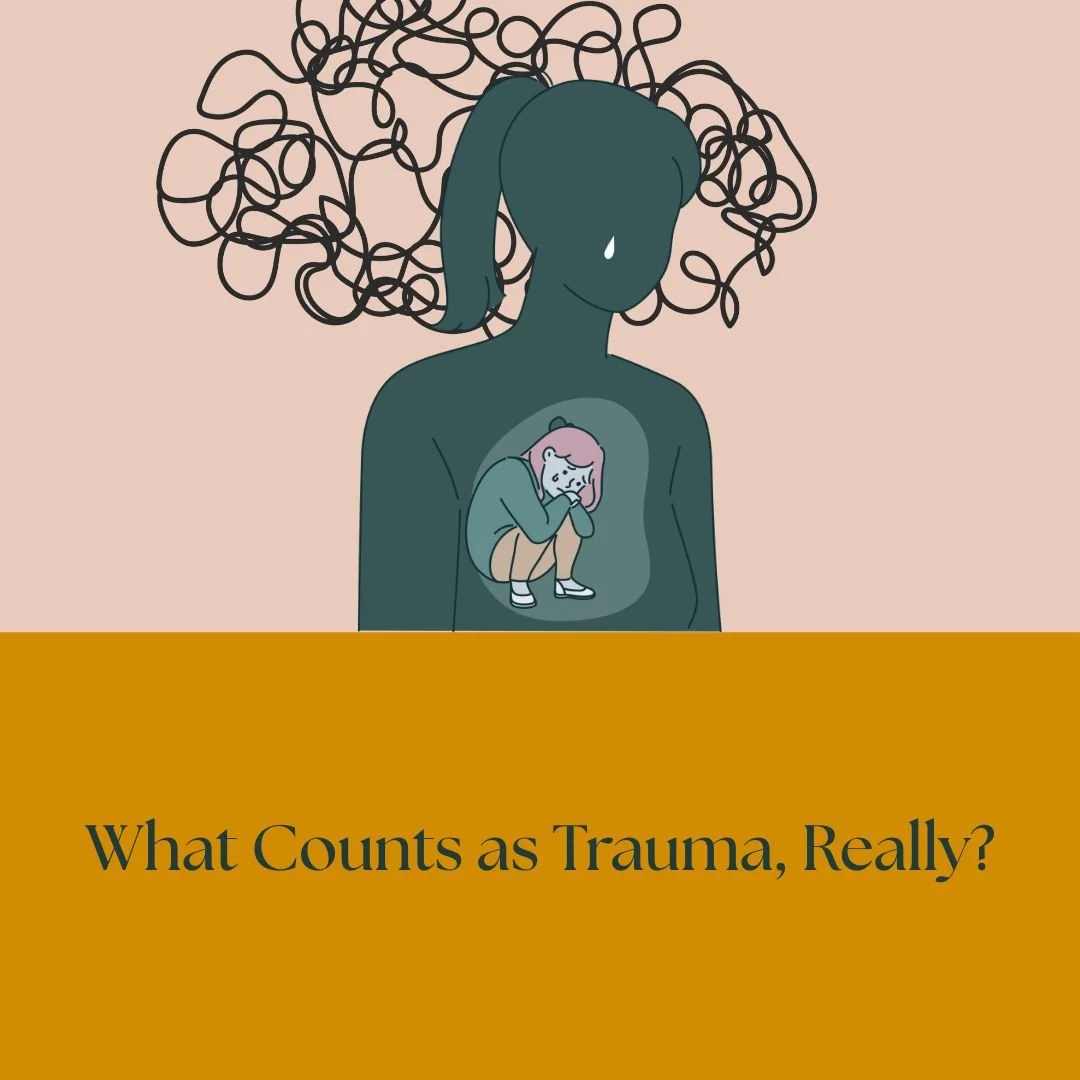
Trauma Is About the Reaction, Not the Event
Think of trauma as emotional overwhelm that your nervous system couldn’t process at the time. It’s not about being “weak” or “overly sensitive.” It’s about hitting a point where the experience was just too much.
In that moment, your brain and body did the only thing they could: they shifted into survival mode. You didn’t short-circuit and die (though sometimes it can feel like your system is crashing). Instead, you adapted in ways that helped you get through. That adaptation is what we call trauma.
This is why:
The same event may be traumatizing for one person and not for another.
Comparing your trauma to someone else’s doesn’t make sense—you’re working with your unique threshold for overwhelm.
Trauma is about tolerance, not comparison.
Big “T” and Little “t” Trauma
You may have heard the terms “Big T” trauma and “little t” trauma. While the labels can be useful, they sometimes oversimplify the reality.
Big T Trauma: Events like abuse, natural disasters, combat, or severe accidents.
Little t Trauma: Experiences that don’t look dramatic on the outside but are still overwhelming—like repeated criticism, emotional neglect, or a painful breakup.
Here’s the thing: your nervous system doesn’t categorize trauma neatly. Both kinds can shape how you see yourself, your relationships, and the world. Both deserve care and healing.
Why Trauma Doesn’t Just “Go Away”
Trauma isn’t something you can just “get over” with time or willpower. It lingers because your nervous system stored that overwhelming experience and may still respond as if the threat is happening now.
That’s why certain situations or feelings can trigger strong reactions—even when you know logically you’re safe. Your body is simply doing its best to protect you.
And this is also why therapy can be so powerful: it helps you process what your brain and body couldn’t handle back then.
Seeking Support Isn’t Weakness—It’s Strength
One of the most damaging myths about trauma is that if you were “strong enough,” you’d be able to handle it alone. The reality? Getting help is one of the strongest things you can do.
Therapy doesn’t erase the fact that something painful happened, but it does help you:
Understand how trauma is affecting your life now.
Develop coping skills to regulate your nervous system.
Reframe old patterns so you can live with more choice and less fear.
Healing doesn’t mean pretending the trauma never existed—it means learning how to live fully and freely despite it.
The Takeaway
So, what counts as trauma? Any experience that overwhelms your ability to cope in the moment. It’s not about comparison. It’s about how your nervous system responded to something that felt unbearable.
Your trauma is valid, whether it looks “big” or “small” to anyone else. And it doesn’t have to define you forever. With support, healing is absolutely possible.
If you’re ready to take that step, trauma-informed therapy can help you process what happened, build resilience, and reclaim the parts of life trauma may have stolen.