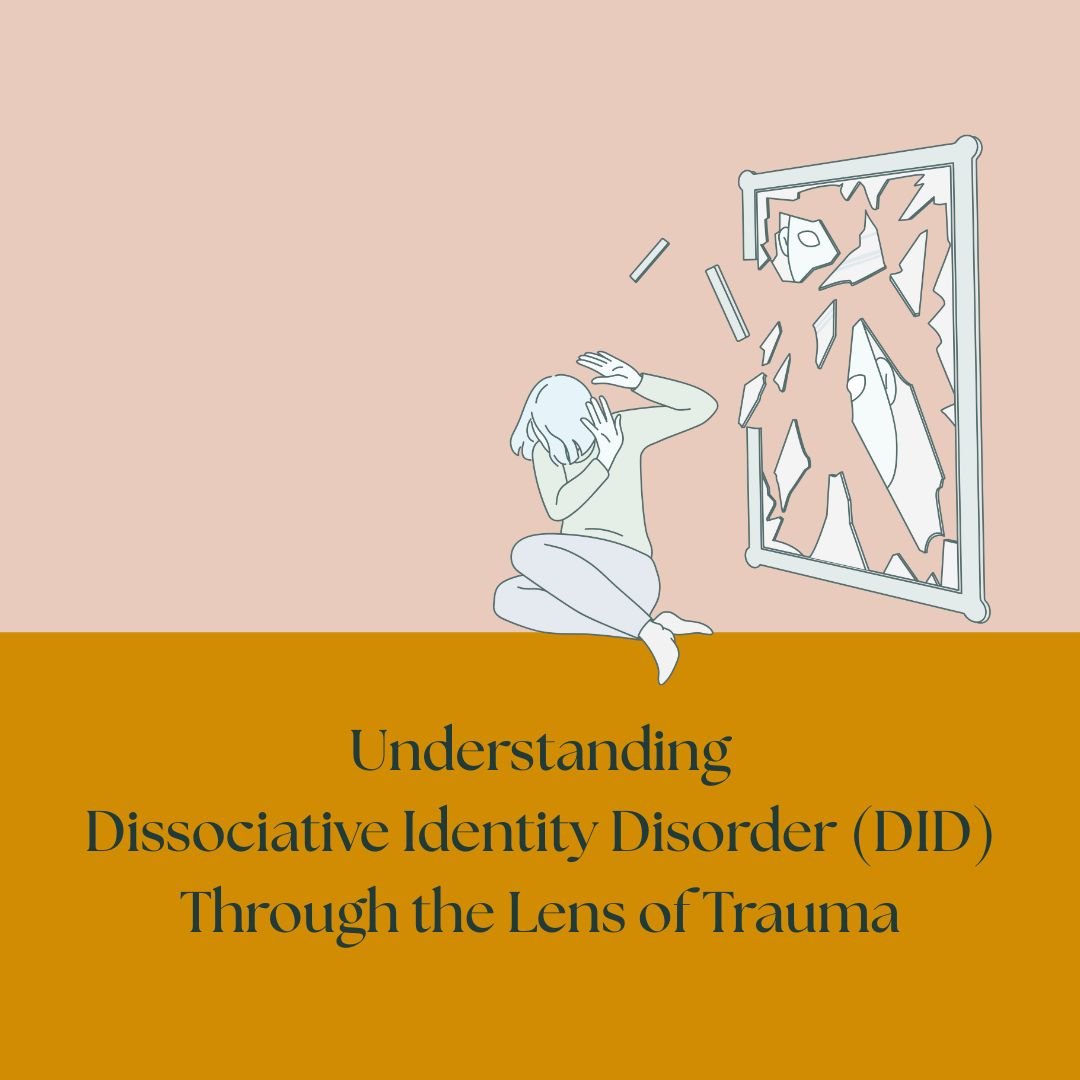
When “Crazy” Makes Sense: Understanding Dissociative Identity Disorder (DID) Through the Lens of Trauma
Let’s Talk About Judging People as “Crazy”
We tend to have empathy for certain mental health struggles.
Depression? People get that.
Anxiety? Totally relatable.
Even PTSD—as long as it’s connected to something familiar, like combat or an accident—gets compassion.
But mention Dissociative Identity Disorder (DID) and suddenly people get uncomfortable. The tone shifts. The judgment and assumptions start.
“That can’t be real.”
“They’re acting out.”
“That’s… scary.”
And I get it — DID can seem confusing, even unbelievable at first.
But here’s the truth: DID isn’t nonsense. It’s neuroscience.
It’s the brain doing what it’s designed to do — protect a person from pain too big to process.
Let’s unpack that in a way that actually makes sense.
What Is Dissociative Identity Disorder (DID)?
Dissociative Identity Disorder (previously called “Multiple Personality Disorder”) happens when someone’s sense of self is divided into distinct “parts” or “identities.”
Each part might hold different memories, emotions, or ways of seeing the world.
One might handle daily life. Another might hold traumatic memories. Another might carry anger, shame, or protectiveness.
It’s a survival response — a system the brain created to protect itself from overwhelming trauma, usually in childhood.
Everyone Dissociates — Yes, Even You
To understand DID, start with something we all do: dissociate.
Ever driven home and realized you don’t remember the last few miles?
Or zoned out in a meeting so completely you missed half the conversation?
That’s mild dissociation — your brain temporarily disconnecting to give you a break.
Now imagine that same coping mechanism being used by a child who’s experiencing severe and repeated trauma.
When physical escape isn’t possible, the brain finds another way out: mental escape.
Over time, that “checking out” becomes a full-time survival strategy.
And when it happens over and over during development, the brain’s wiring itself around survival — not stability.
How the Brain Adapts to Trauma
Here’s the “ah-ha” moment most people miss:
Children aren’t born with one single, unified identity.
They start with many parts — different emotional and behavioral states that slowly integrate as they grow up in a safe, consistent environment.
But what if the environment isn’t safe?
What if trauma happens repeatedly, before the child’s sense of self ever has a chance to fully form?
Then the brain says,
“Okay, let’s keep the painful stuff separate so the rest of us can function.”
That’s what DID really is: the brain’s best attempt to compartmentalize trauma so life can go on.
Those “separate pieces” that would normally integrate never get to fuse — and instead, they stay divided as a means of survival.
(If you’ve ever wondered why “awareness” alone isn’t enough to heal, see my post Why Awareness Isn’t Enough (But Still Matters).)
Why DID Actually Makes Sense
It’s easy to assume DID is bizarre until you break it down step by step.
If a child is terrified and can’t escape physically, their brain escapes mentally.
To survive, the brain creates internal “walls” — dividing memories and emotions into different compartments.
One part holds the pain. Another focuses on school. Another keeps pretending everything’s okay.
It’s not a glitch — it’s genius.
The brain did exactly what it had to do to keep the person alive.
It’s just that the same strategy that saved them back then can make adult life difficult and confusing now.
“But Isn’t That Just Made Up?”
This is one of the biggest misconceptions about DID, and it couldn’t be further from the truth.
DID isn’t roleplay or “attention seeking.”
There’s decades of research confirming that DID is real, measurable, and trauma-based.
In brain imaging studies, people with DID show clear differences in how memory, emotion, and identity networks function.
Their brains literally light up differently depending on which part is active.
You can’t fake that with imagination.
So no, it’s not made up.
It’s protection, not performance.
What It’s Like to Live With DID
Imagine life as a group project you didn’t sign up for — but you’re still responsible for turning in the work.
Each “part” might have its own opinions, emotions, and memories.
One might handle daily tasks, while another carries trauma or fear.
Switching between parts isn’t theatrical; it can be disorienting, exhausting, or feel like losing time.
Most people with DID aren’t dangerous or dramatic. They’re often highly functional on the outside and exhausted inside from managing a mind that’s constantly negotiating who takes control.
It’s not chaos — it’s strategy.
A system doing its best to keep functioning after a lifetime of surviving.
Why We Need to Talk About DID
DID makes people uncomfortable because it challenges our idea of what a “normal mind” should look like.
But if you zoom out, it’s not that foreign at all.
We all compartmentalize. We all disconnect when things get too painful.
DID just represents that same process — turned all the way up, and locked in place.
When we drop the judgment, we create space for understanding.
DID is the story of a smart, creative, resilient brain doing whatever it takes to survive.
How to Support Someone With DID
If you know someone with DID or suspect you might, here’s how to show up well:
✅ Believe them. Even if you don’t fully understand, validation matters.
✅ Don’t sensationalize it. Avoid making them prove their parts or dramatize their experience.
✅ Offer consistency. Predictable relationships are grounding.
✅ Let them lead. They know what feels safe to share and when.
✅ Encourage trauma-informed care. Look for therapists trained in dissociation and complex trauma.
✅ See the person first. The diagnosis doesn’t define their worth.
The Bottom Line
When you understand how Dissociative Identity Disorder develops, it stops being scary — and starts being logical.
It’s not a “crazy brain.”
It’s a brilliant brain doing its best to survive when survival shouldn’t have been its job.
“If the world won’t protect me,” the brain says,
“I’ll protect myself — even if it means breaking into pieces to do it.”
And when you see it that way, “crazy” doesn’t fit anymore.
Human does.