We all have moments where we want to tuck parts of ourselves away — the mistakes, the “bad” thoughts, the choices we regret. Sometimes we keep these things from loved ones, and sometimes we even try to keep them from ourselves. But there’s a problem: what we hide doesn’t actually disappear.
As I often tell my therapy clients, “shame grows in the dark.”
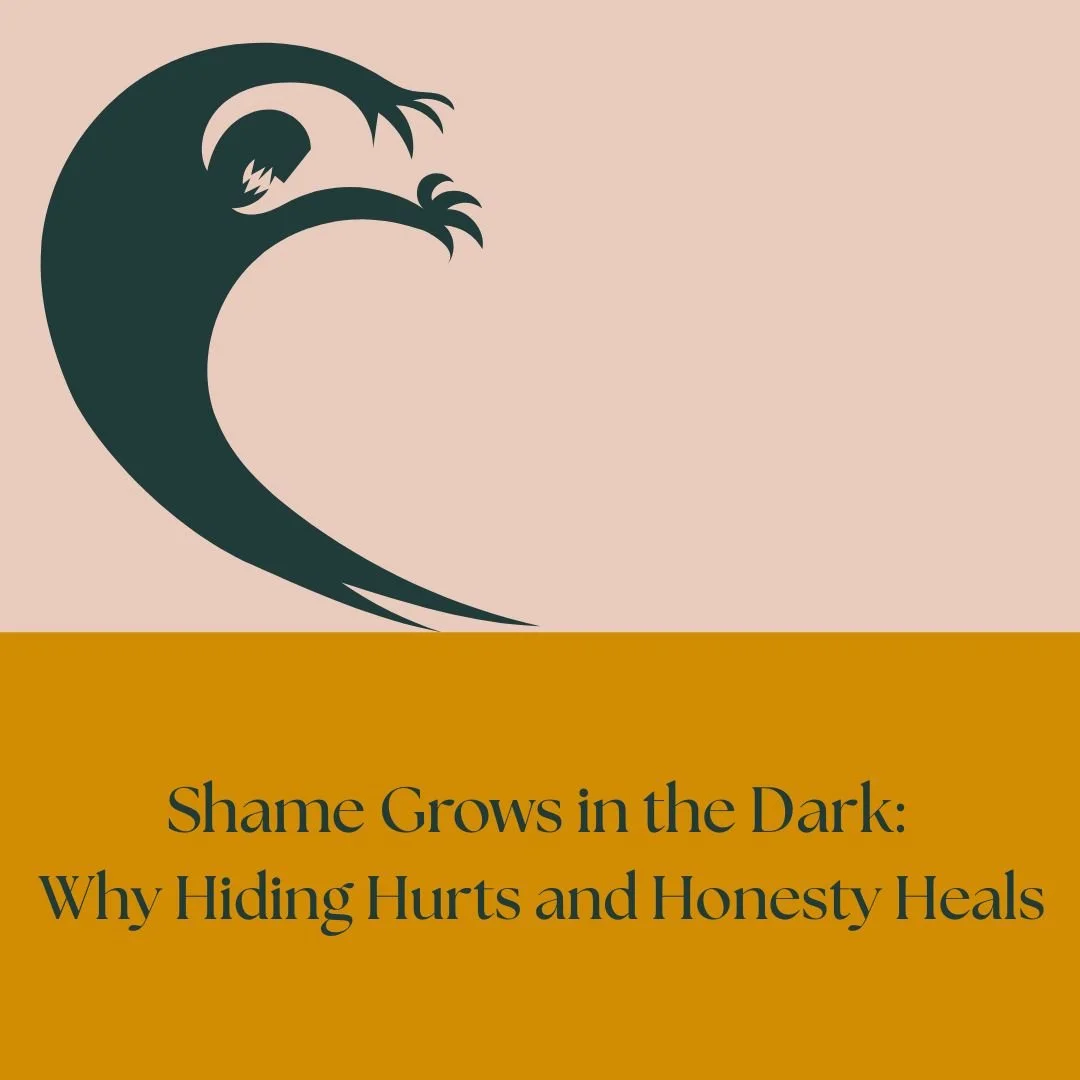
The Shame Monster Metaphor
Think of shame like a monster. In the dark, it gets bigger, scarier, and harder to face. The more we avoid looking at it — or the more we hide it from others — the stronger it feels. But when you bring it out into the open, it shrinks. Suddenly, it’s not a giant, terrifying creature. It’s small, manageable, and far less threatening than you imagined.
How Shame Shows Up
Shame can sneak in through everyday situations:
Avoiding important conversations because you’re afraid of judgment.
Keeping “bad” thoughts or mistakes bottled up.
Shutting down in relationships instead of showing vulnerability.
Hiding parts of yourself you worry others won’t accept.
The tricky part is that hiding may feel protective in the moment, but it almost always backfires. Instead of creating safety, it creates distance — from your partner, your friends, your family, and even from yourself.
Why Bringing Shame Into the Light Helps
When you name shame and share it — whether in therapy or in a trusted relationship — you strip it of its power. Connection is the antidote to shame. What feels unbearable alone often becomes tolerable (and even healing) when met with understanding and compassion.
Research backs this up: vulnerability strengthens trust, reduces feelings of isolation, and builds healthier, more authentic relationships.
As a psychologist, I see shame come up all the time. Clients may hesitate to tell me something they think is too embarrassing or “bad.” But time and again, once the words are spoken, the monster shrinks. What felt like a dealbreaker becomes something workable. What felt like a flaw becomes a human experience.
That’s the power of turning on the light.
Final Thoughts
Shame feeds on silence. It grows in secrecy and thrives in isolation. But when you risk sharing your truth — with a therapist, a partner, or a trusted friend — shame loses its grip.
You don’t have to fight the shame monster alone. Therapy offers a safe space to bring it out into the open, to see it for what it is, and to reconnect with yourself and others in more authentic ways.